Application Overview
This illustrative freight scenario helps buyers choose side wall trailer features. It does not represent a real shipment or confirmed customer specification.
Questions to Confirm
- Define pallet dimensions and total load
- Identify forklift or crane access
- Plan cargo restraint and weather protection
- Confirm route and legal weight limits
Configuration Options to Discuss
- Select deck and side-wall geometry for cargo
- Specify rated tie-down and access points
- Review axle, tire and suspension selection
- Agree loading and inspection procedures
Planning Checklist
| Application | Palletized general freight |
|---|---|
| Cargo and payload | To be confirmed |
| Side-wall layout | To match loading method |
| Restraint points | To be specified by load plan |
Application Visual
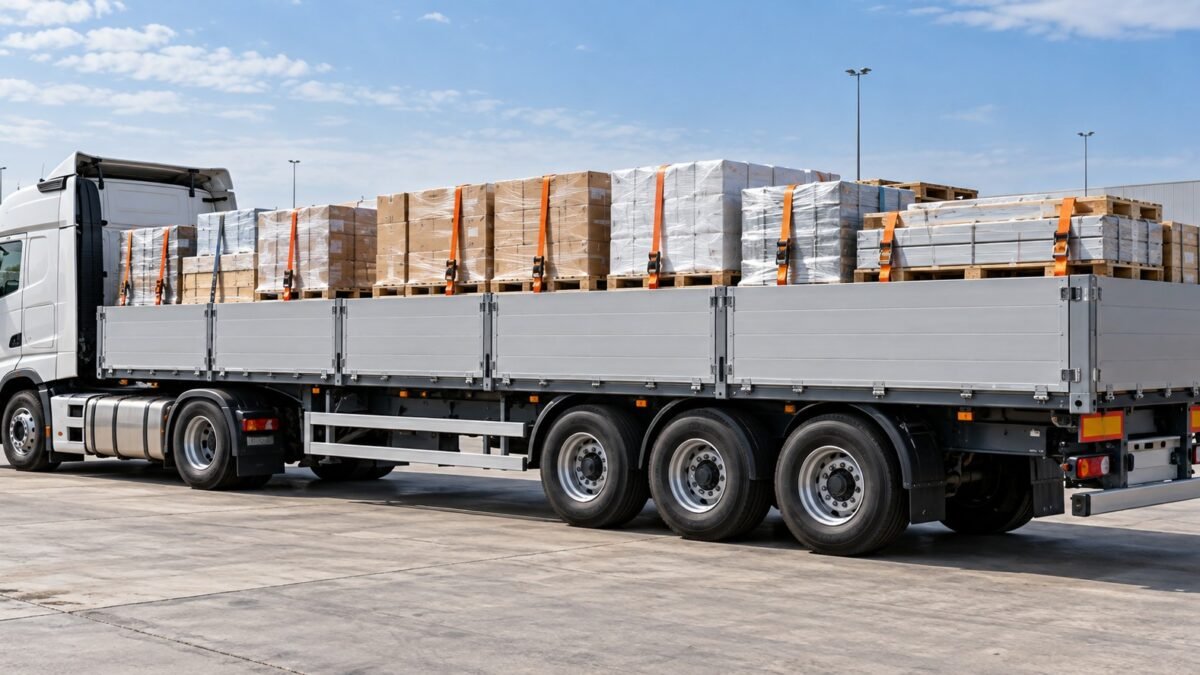
Illustration for transport planning; no customer delivery is documented here.
Selection Guide
This illustrative freight scenario helps buyers choose side wall trailer features. It does not represent a real shipment or confirmed customer specification.
Define the cargo and loading method
Pallet dimensions, stack height, fragility and total loaded mass determine the usable deck and side-wall layout. Explain whether loading is from the side, rear or top, and whether a forklift or crane is used. Side walls can help contain cargo but do not replace a designed restraint system.
Plan restraint and access
Ask for a drawing that locates tie-down points, access openings and removable sections if needed. Cargo should be secured according to the route, material and applicable local rules. Confirm whether tarpaulin or other weather protection is required and how it affects loading time and maintenance.
Match the trailer to the route
Review tractor compatibility, legal axle loads, tire and suspension choice, and delivery-site turning space. Request an itemized specification and written loading assumptions before manufacture so that a general freight trailer is not sold as a universal solution.
Describe the freight, not only the trailer
Provide pallet footprint, stack height, total load, packaging strength and whether the freight is uniform or mixed. Include the number of loading points, forklift dimensions and how often cargo is handled from the side. A side-wall trailer with an attractive nominal capacity may still be unsuitable if its deck length, wall openings or lashing points do not support the real load plan. Ask for a drawing that shows the available loading area and access dimensions.
Plan restraint and weather protection
Side walls help define the cargo space, but load restraint must be designed for the cargo and route. Review tie-down point positions, working load limits and methods for preventing pallet movement. If the goods need protection from rain or dust, discuss a suitable cover and its effect on access and maintenance. A curtain-side trailer may offer faster side access for some operations, while a side-wall model may suit other loading routines; these are different configurations with different restraint considerations.
Match the running gear to the route
Provide tractor coupling details, road quality, legal axle loads, delivery-yard access and expected annual distance. Discuss three- and four-axle alternatives only after the gross combination and load distribution are understood. More axles can change empty weight, tire wear and maneuverability, so the selection should come from the operating brief. Confirm brakes, tires, suspension and landing gear against the written specification and locally available service parts.
Complete the buyer's acceptance plan
Request a final drawing, component list, restraint-point description and inspection checklist. Verify the wall opening and closure system with the intended forklift operation. Ask how the trailer will be packed and shipped and which accessories are included at handover. This illustration shows a possible use for palletized freight; it does not document a real customer shipment or validate a fixed payload, dimension or route approval.
Related trailer products
Use these product pages to compare available trailer layouts with the requirements discussed above. Final dimensions, capacity and components must be confirmed against your cargo, route and local rules.
- 3 Axle Side Wall Semi Trailer — 3 axle side wall cargo…
- 4 Axle Side Wall Cargo Trailer — 4 axle heavy-duty side…
- 3 Axle Fence Stake Trailer — Fence stake semi trail…
Frequently asked questions
Do side walls alone secure palletized freight?
No. The load needs appropriate restraint and an approved loading plan; side walls are only one part of the arrangement.
Can side walls replace cargo straps?
No. Use a restraint plan appropriate to the cargo, route and applicable rules. Walls alone should not be assumed to secure palletized freight.