Application Overview
This is an illustrative flatbed container transport brief, not a record of a customer order. Final layout and payload depend on the actual container types and operating route.
Questions to Confirm
- Identify 20ft or 40ft container arrangements
- Confirm loaded weights and center of gravity
- Match terminal procedures and tractor geometry
- Check route and axle-load rules
Configuration Options to Discuss
- Draw the permitted container positions
- Specify compatible twist-lock locations
- Review kingpin and axle load distribution
- Confirm securing, inspection and maintenance access
Planning Checklist
| Application | Container transport |
|---|---|
| Container layout | To be confirmed |
| Twist locks | To match approved layout |
| Payload and axles | To be confirmed against legal limits |
Application Visual
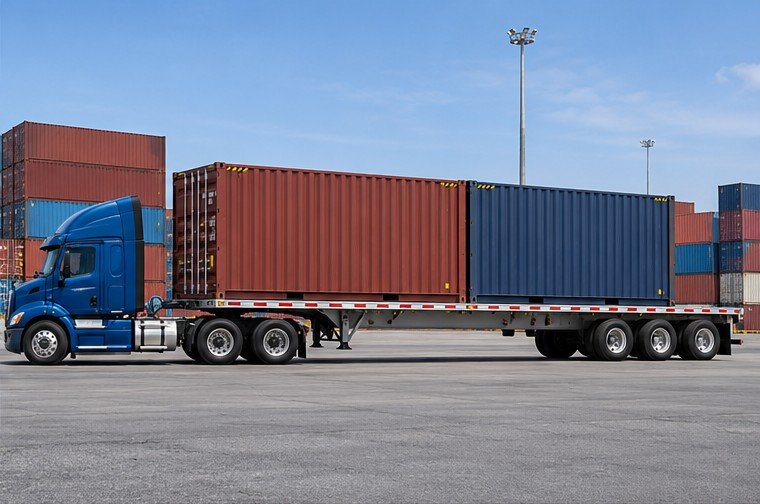
Illustration for transport planning; no customer delivery is documented here.
Selection Guide
This is an illustrative flatbed container transport brief, not a record of a customer order. Final layout and payload depend on the actual container types and operating route.
Define the container combinations
A flatbed used for containers should be designed around the combinations actually carried. A single 40ft container and two 20ft containers create different loading patterns and locking positions. Provide maximum gross container weights and ask for a drawing showing each approved position rather than assuming all layouts are interchangeable.
Review load distribution and restraints
The trailer, tractor and route must be checked as a combination. Ask how kingpin load and individual axle loads change between proposed container layouts. Confirm twist-lock type, access and operating procedure, then verify the terminal's loading equipment and safe working space.
Prepare for export and operation
Before purchase, compare deck length, coupling height, tire and suspension specifications with the tractor and local regulations. Request a component list, dimensioned drawing and inspection checklist. The final quotation should state which container layouts are included.
List every intended container arrangement
A single loaded 40ft container, two 20ft units and an empty repositioning move do not place the same loads on the frame. State each intended combination, the maximum gross mass and whether the terminal uses a crane or reach stacker. Ask for a drawing showing the approved lock locations for every arrangement. A trailer advertised as '40ft flatbed' should not be assumed to accept every 20ft combination without confirming structure and lock positions.
Review kingpin and axle loads
Container weight distribution changes the load on the tractor and trailer axles. Request the design assumptions for each container position, then compare the resulting combination with applicable road limits. Tractor fifth-wheel height, coupling clearance and chassis length also affect usability. If the route includes rough access roads or frequent terminal handling, discuss suspension, tire and protection choices with their maintenance consequences. Record the agreed operating envelope in the quotation rather than relying on a single payload figure.
Make locks and access practical
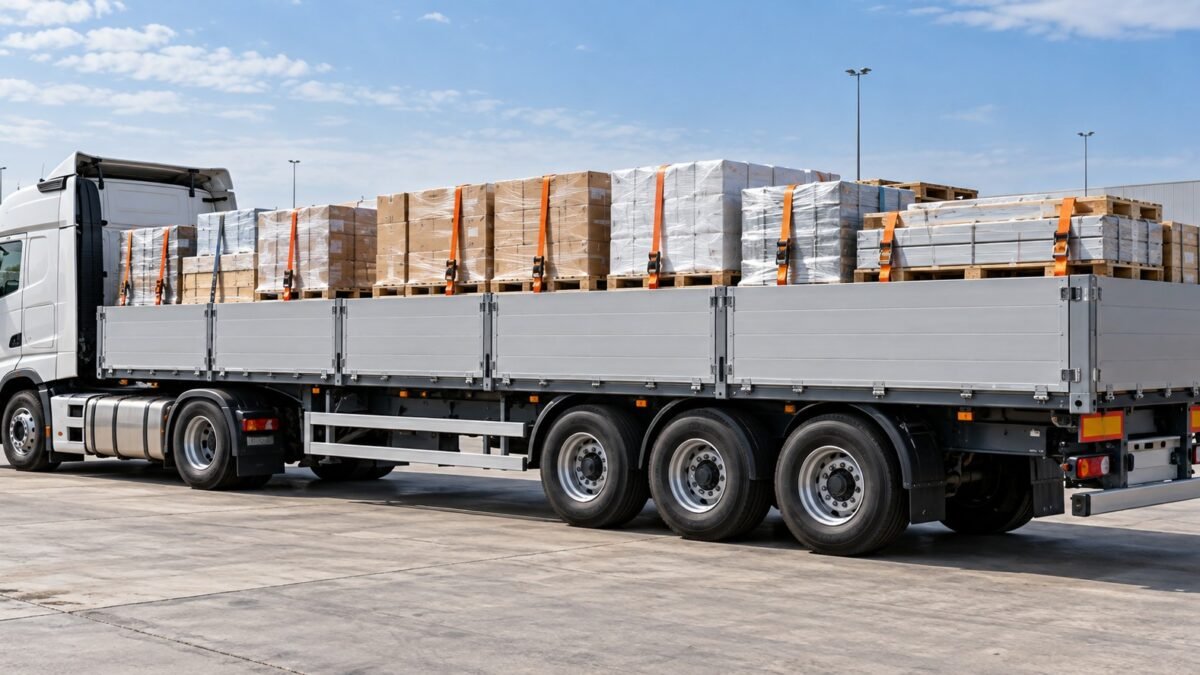
A twist lock must match the container corner position and be accessible to the operator. Inspect how locks are mounted, operated and maintained. Ask whether a loaded container obstructs access to lines, landing gear or other service points. Define the inspection routine for lock condition and securing before each trip. The buyer should also agree on any separate requirements for carrying non-container general cargo, because that use calls for its own restraint points and load plan.
Confirm purchase and export details
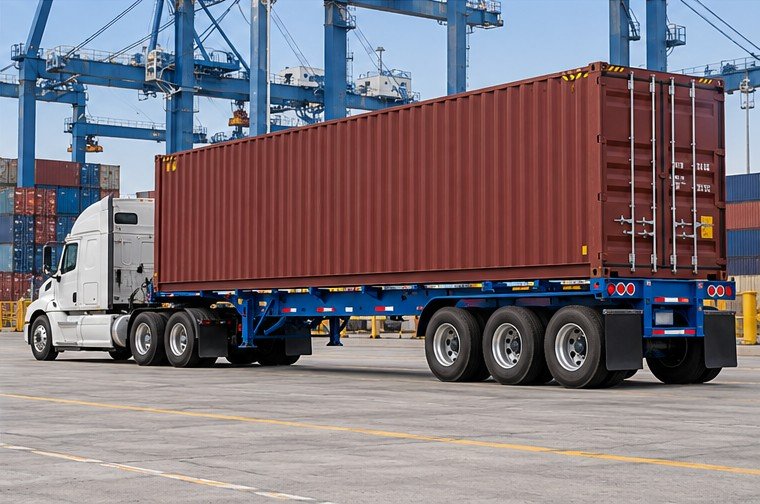
Request final dimensions, component ratings, approved layouts, inspection records and a packing or shipping plan. Compare the flatbed with a skeleton trailer when the main job is repetitive container haulage and deck utility is less important. This configuration example is a decision framework, not evidence of a completed ZONHAN customer shipment. The final specification must be checked against the buyer's actual containers, tractor and destination rules.
Related trailer products
Use these product pages to compare available trailer layouts with the requirements discussed above. Final dimensions, capacity and components must be confirmed against your cargo, route and local rules.
- 3 Axle Flatbed Semi Trailer — Standard 3 axle flatbe…
- 40ft Container Flatbed Trailer — 40ft flatbed trailer w…
- 3 Axle Skeleton Container Trailer — Lightweight skeleton s…
Frequently asked questions
Can a flatbed automatically carry both 20ft and 40ft containers?
Only if its approved lock positions, structural design, load distribution and legal limits support those arrangements.
Why compare a flatbed with a skeleton container trailer?
A flatbed offers a continuous deck for some general cargo tasks, while a skeleton design focuses on container handling. The right choice depends on approved container layouts, other cargo needs and route economics.