
After-Sales Support
After-Sales Parts and Maintenance Support
Basic after-sales support process for trailer parts, maintenance and repeat orders.
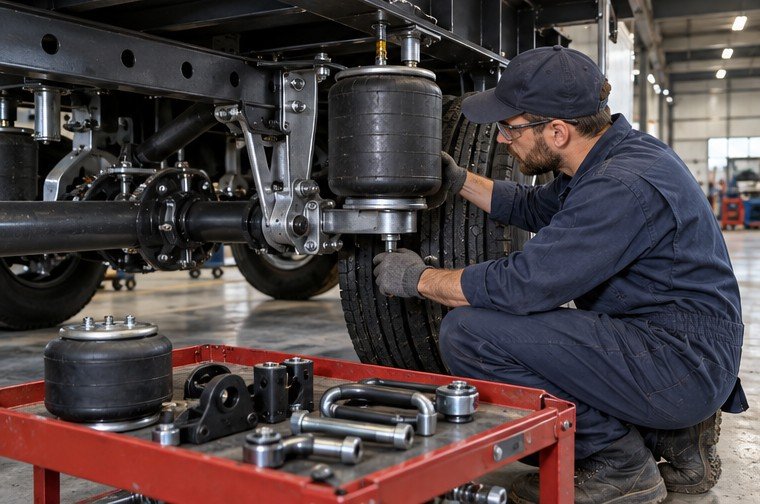
After-Sales Support Overview
After-sales support for semi-trailers ensures continued safety, performance, and reliability. When a trailer is delivered or undergoes maintenance, a clear handover process is essential. This begins with identifying the trailer using its unique serial number, which links to the official configuration drawing and service history. Maintaining accurate records of components, modifications, and inspection schedules enables consistent and effective support.
Key Elements of the Handover Process
The handover includes documenting the trailer’s current configuration, including axle type, suspension system, and payload specifications. This information is critical for diagnosing issues and ensuring that any repairs or replacements are compatible. For example, a trailer equipped with a 13-ton axle assembly requires specific load and alignment checks, while those with an air-ride suspension system need regular pressure and damping assessments.
Regular Inspection and Diagnostics
Preventive maintenance includes scheduled checks of brakes, suspension, and tires. Brake performance should be evaluated for wear, response, and evenness of pad contact. Suspension components—especially air springs and shock absorbers—must be inspected for leaks, sagging, or unusual noise. Tire pressure, tread depth, and alignment are also monitored to prevent premature failure. Any issues are documented with photos and operational logs to support diagnosis and track trends over time.
Replacement Parts and Compatibility
When parts are needed, only components verified as compatible with the trailer’s original configuration are supplied. This means that part selection depends on the trailer’s serial number, axle type, and suspension design. Replacement parts are sourced from approved suppliers and matched to the original equipment manufacturer (OEM) specifications. Customers are advised to consult the official configuration drawing to confirm compatibility before ordering.
Qualified Repair and Warranty Clarification
All repairs must be carried out by certified technicians using approved procedures. No warranty is offered for repairs performed by unauthorized parties or without documented inspection records. ZONHAN does not provide unverified or blanket warranties on after-sales services. The final configuration of the trailer—especially in relation to payload, route, and terrain—must be reviewed and approved in accordance with the original design and safety standards.
Identify replacement parts precisely
When a component needs replacement, provide the trailer serial number, part markings, clear photographs and a description of the fault. Check dimensions and compatibility against the as-built parts list before installing a substitute. Record the repair date and the person who approved it. If the issue concerns braking, coupling, suspension or a structural member, stop using the trailer until a qualified technician has assessed it under the applicable maintenance instructions.
Conclusion
Effective after-sales support relies on clear documentation, consistent inspection, and adherence to technical specifications. By following a structured handover and maintenance process, customers can ensure their semi-trailers remain safe, efficient, and compliant. Always refer to the official configuration drawing and consult with ZONHAN support when in doubt about part compatibility or repair procedures. This approach supports long-term reliability and minimizes downtime.