
Factory Visit Guide
Semi Trailer Factory Visit Checklist for Overseas Buyers
Plan a semi trailer factory visit around the product drawing, production route, quality records and a clear follow-up list.
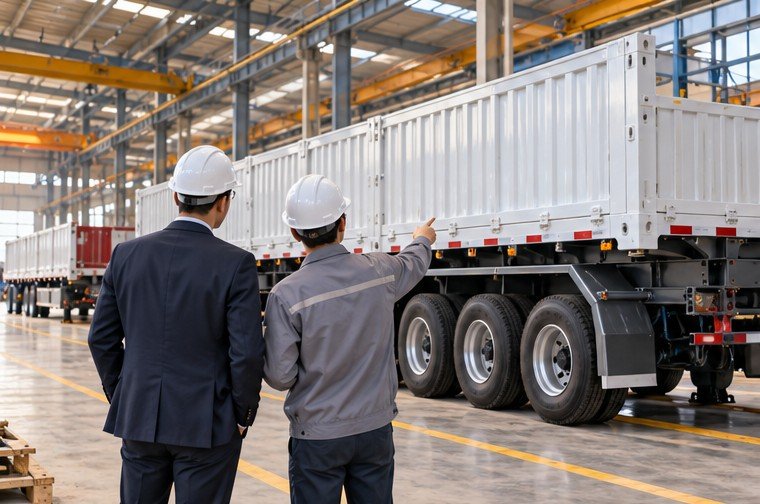
A factory visit is most useful when the buyer arrives with a defined transport requirement. This guide explains how to prepare for a semi trailer manufacturing visit and what evidence to request. It is a planning article, not a report of an actual customer visit.
Before the visit: send the operating brief
Share the cargo type, target payload, loading equipment, destination, main road conditions and tractor model. If you are comparing flatbed, lowbed or tanker trailers, identify the main application before asking for a quotation. Ask the factory which drawings, sample units and production areas can be reviewed during the visit. This makes the discussion specific to your project rather than a general showroom tour.
In the workshop: follow the manufacturing sequence
A practical route starts with raw-material identification and cutting, then continues through chassis fabrication, welding, surface preparation, painting, axle and suspension assembly, and final checks. At each stage, compare the unit or drawing with the specification under discussion. A photograph of a finished trailer alone does not establish the steel grade, dimensions or component brands of a future order.
At the end: record open decisions
Request a revised drawing, itemized configuration, inspection points, delivery scope and quotation validity. Record who will verify any unresolved axle rating, tire size, brake system or local compliance issue. The supplier should confirm the final technical specification in writing before production begins.
Choose the trailer questions before booking travel
Ask the supplier which production stage you will see and whether your intended model is available on the day. A completed flatbed is useful for checking fittings and finish, while a chassis before painting makes structural details easier to see. Request an agenda with time for drawings, the workshop route, the finished-vehicle area and an engineering conversation. If several buyers attend, assign one person to record measurements and another to record unanswered questions. This prevents an impressive factory tour from replacing the technical review you actually need.
Compare what you see with an identified configuration
A display trailer may use different axles, tires, suspension or deck dimensions from the unit in your quotation. Write down the model or unit identifier and ask which details are standard, optional or specific to another customer's order. For a lowbed, focus on platform geometry and loading equipment; for a flatbed, check container lock layout and cargo restraint points; for a tanker, ask about the intended liquid and required approvals. Never copy a specification from an unrelated display vehicle into your purchase agreement.
Request evidence that can be checked later
Useful records include an approved drawing revision, component list, inspection checklist, dated photos of agreed checkpoints and a description of the final acceptance process. Ask which tests are carried out in-house and which need an independent inspector or certification body. If a claim such as rated payload, steel grade or brake compliance matters to your operation, request the document that supports it. Keep all evidence tied to the same order number so it cannot be confused with another trailer.
Turn the visit into an actionable quotation
Before leaving, confirm the cargo, permitted gross weight, tractor coupling height, route, delivery destination, shipping method and any local registration constraints. Ask for a revised quotation that names the exact component brands or acceptable alternatives and lists exclusions. Agree who will respond to open technical points and when. The visit has done its job when the buyer can compare a written offer and drawing with the transport task, rather than relying on memory or general marketing photos.
Related trailer products
Use these product pages to compare available trailer layouts with the requirements discussed above. Final dimensions, capacity and components must be confirmed against your cargo, route and local rules.
- 3 Axle Lowbed Semi Trailer — 3 axle low bed semi tr…
- 3 Axle Flatbed Semi Trailer — Standard 3 axle flatbe…
- 3 Axle Fuel Tank Semi Trailer — 3 axle fuel tank semi …
Frequently asked questions
What should I bring to a trailer factory visit?
Bring cargo dimensions and weight, route details, tractor specifications and a list of required documents. A draft technical checklist helps the factory prepare relevant units and engineers.
Should I visit before or after placing an order?
A pre-order visit helps compare suppliers and designs; a later inspection checks the specific build. If travel is limited, agree on independent inspection and documented checkpoints in the purchase terms.